MERCADO PAGO - Desktop & Smart POS
Point of Sale
Case
Problem
Context: Physical and hybrid Retail and Food Service merchants faced a critical disconnect at the counter: they recorded the sale in one system and charged in another, creating rework and queues. Manual price entry and inefficient item search made checkout slow and error-prone. Additionally, businesses selling in bulk — such as bakeries and butcher shops — had no support for fractional sales.
Value proposition: Transform the checkout moment by integrating order recording, inventory update and payment in a single interface. Merchants gain a 360° view of counter sales regardless of how the customer pays, with agility and adaptation to different in-person business models.
The solution: The Point of Sale (POS) was completely redesigned for the Mercado Pago Management Software. It delivers barcode reading (EAN), search by name or SKU, support for fractional sales (e.g.: 0.125 kg), omnichannel payments (Point Smart, QR Code, cash and third-party machines) and end-to-end integration with the invoicing module for invoice issuance and returns with automatic stock restoration.
Business impact: The POS is one of Mercado Pago's retention anchors. By capturing transactions from other card machines and cash, it increases platform primacy, protects the seller's account against competitors and drives the strategy of serving more mature businesses (Move Up Market).
User profile and the problem
Understanding who our merchants are
Segment: SMEs and higher-revenue sellers (HiLo), with physical stores or hybrid operations in Retail and Food Service segments. They are entrepreneurs in a scalability phase looking to migrate from rudimentary management — notebooks, spreadsheets and basic systems — to more professional and automated operations.
Main pain points at the counter
- Disconnect between sale and payment: Merchants recorded the sale in one system and charged on the card machine at a different time, generating rework and cash register errors.
- Slow checkout: Manual price entry and inefficient item search created queues and impacted the end consumer's experience.
- Unit of measure limitations: Basic systems only supported unit sales. Businesses like bakeries and butcher shops needed to sell by weight (250g, 0.5 kg) without tools to do so.
Web POS — main screen
The solution — Web POS
Sales registration and checkout on computer
Cart and contextual actions
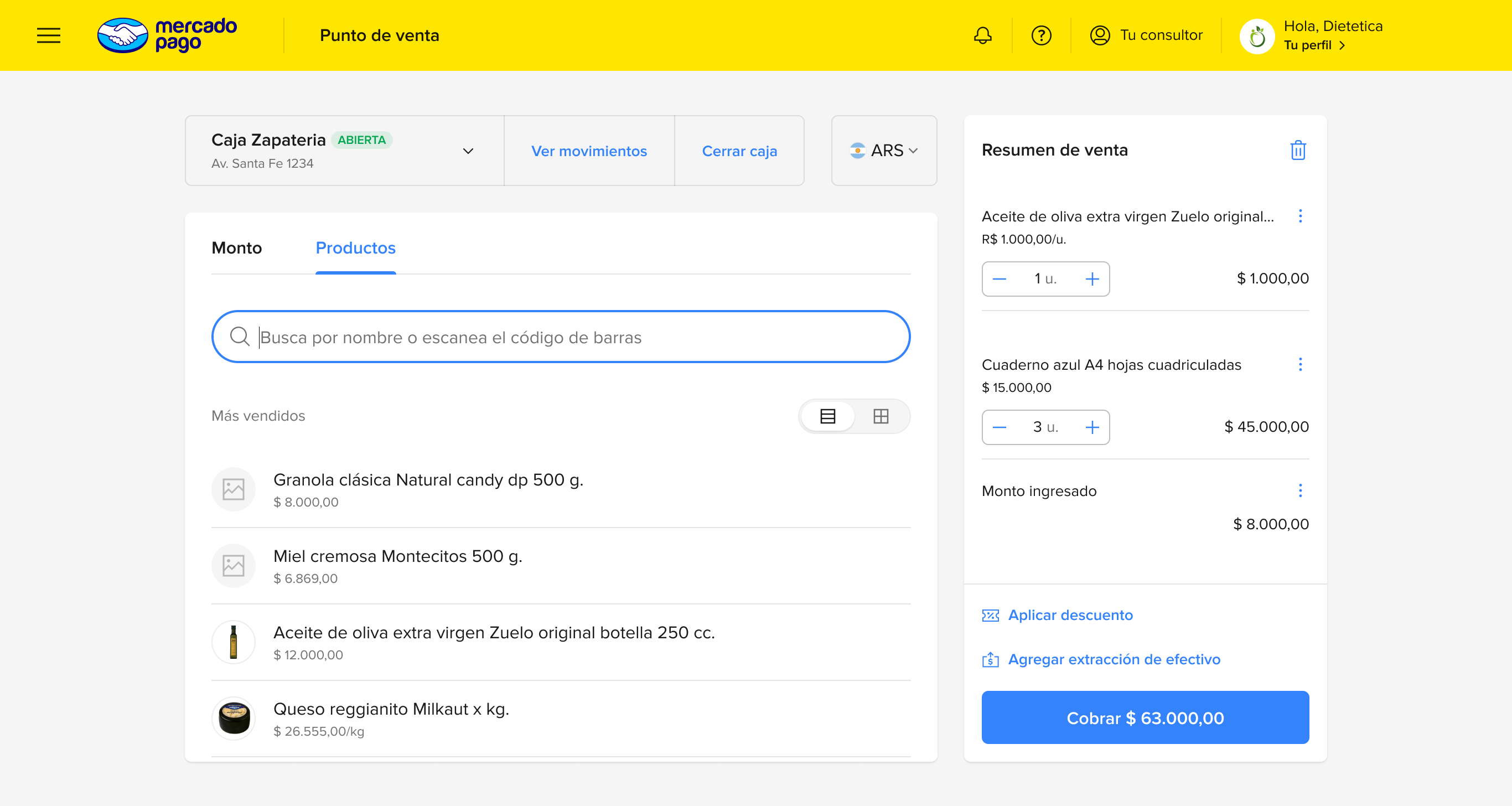
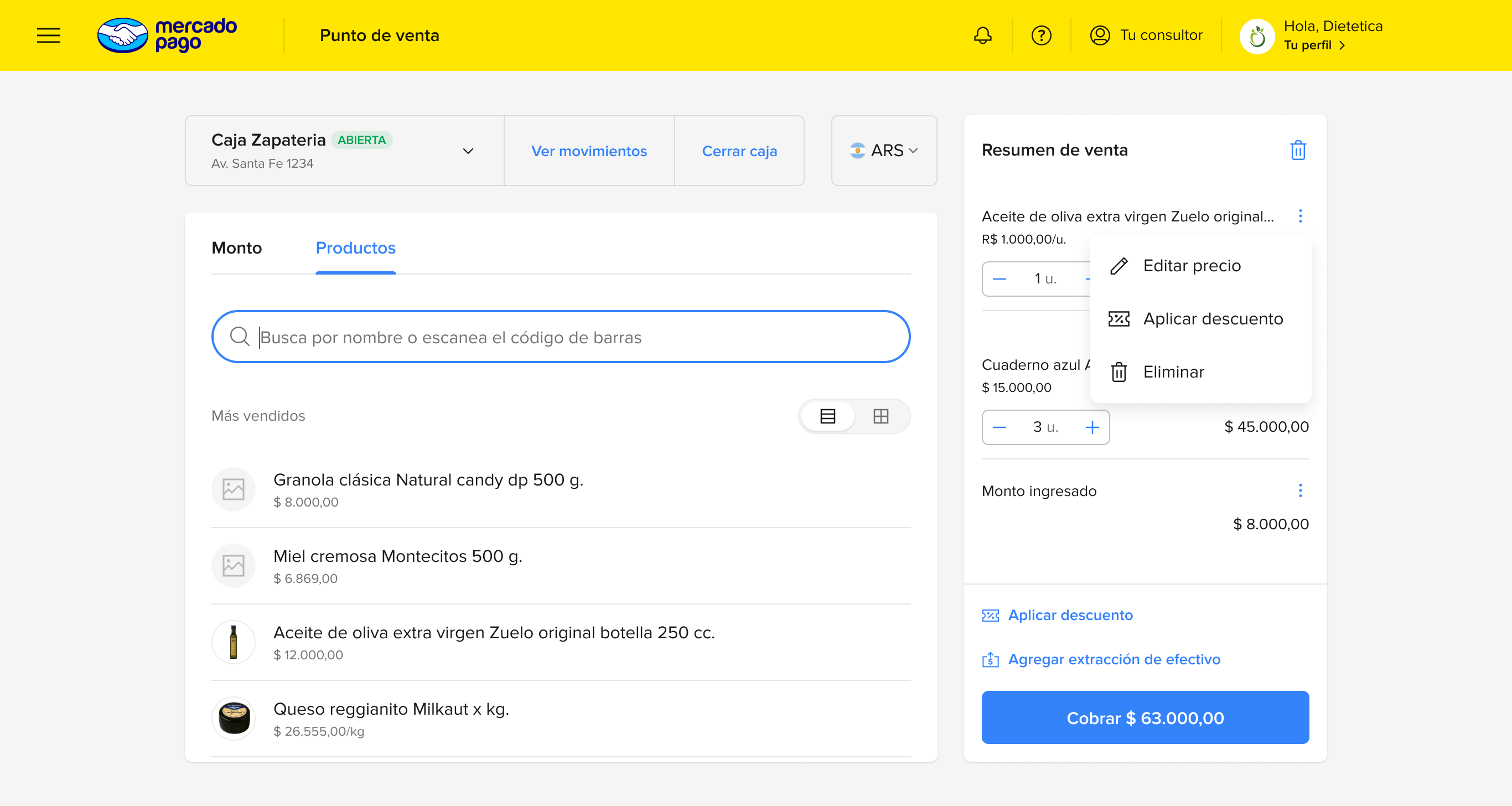
The layout divides the screen between the product catalog (search + list) and the sale summary (cart). Merchants can add products by barcode or search, and by selecting an item in the cart they access contextual actions like edit price, apply discount or remove — without modals that block the flow.
Cart with contextual menu
Omnichannel payments
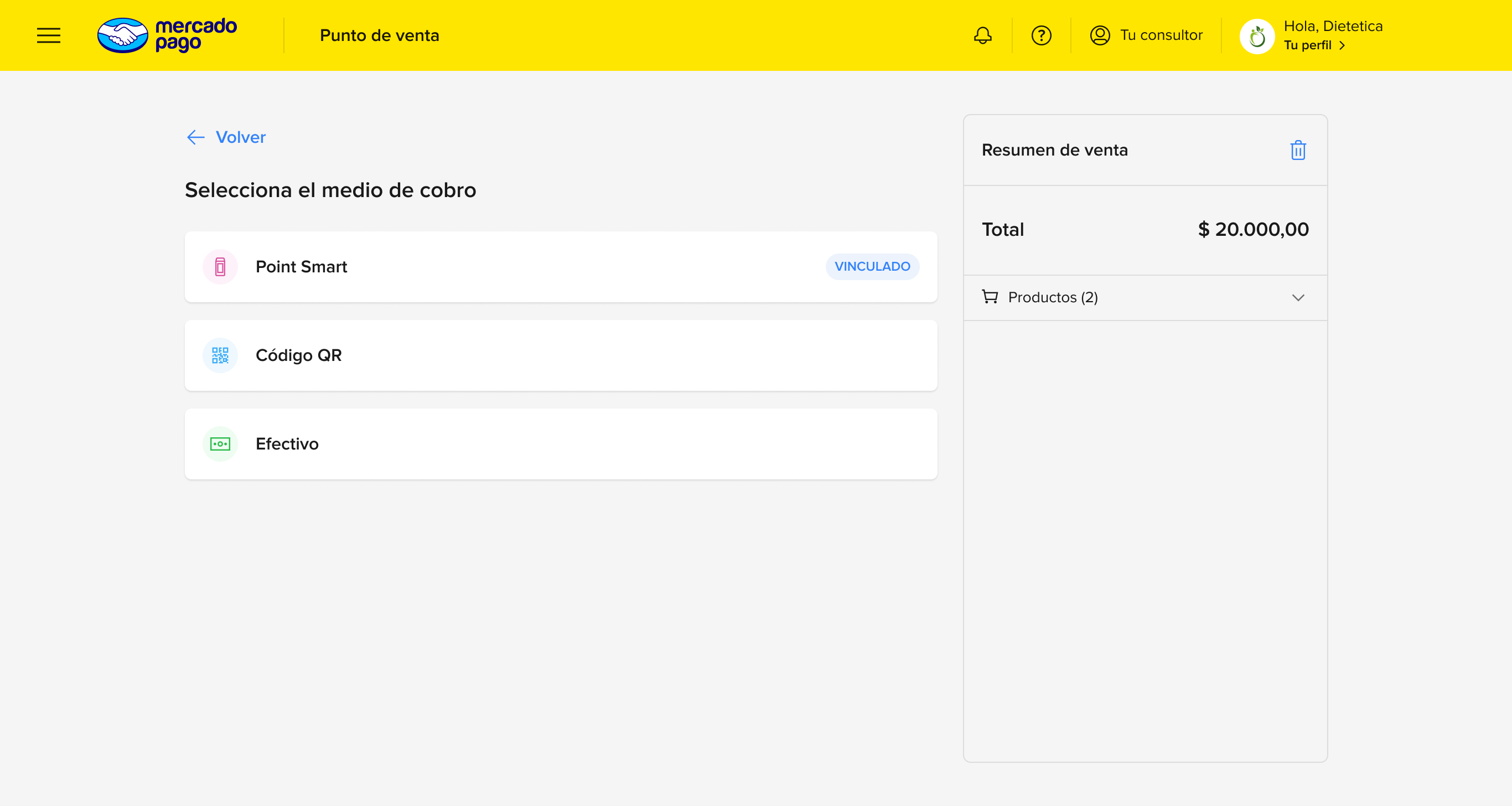
After registering products, the merchant chooses how to receive payment. The POS supports Point Smart (integrated card machine), QR Code and Cash — as well as allowing registration of payments on third-party machines. This ensures 100% of counter sales are captured on the platform regardless of payment method.
Payment method selection
Confirmation and next steps
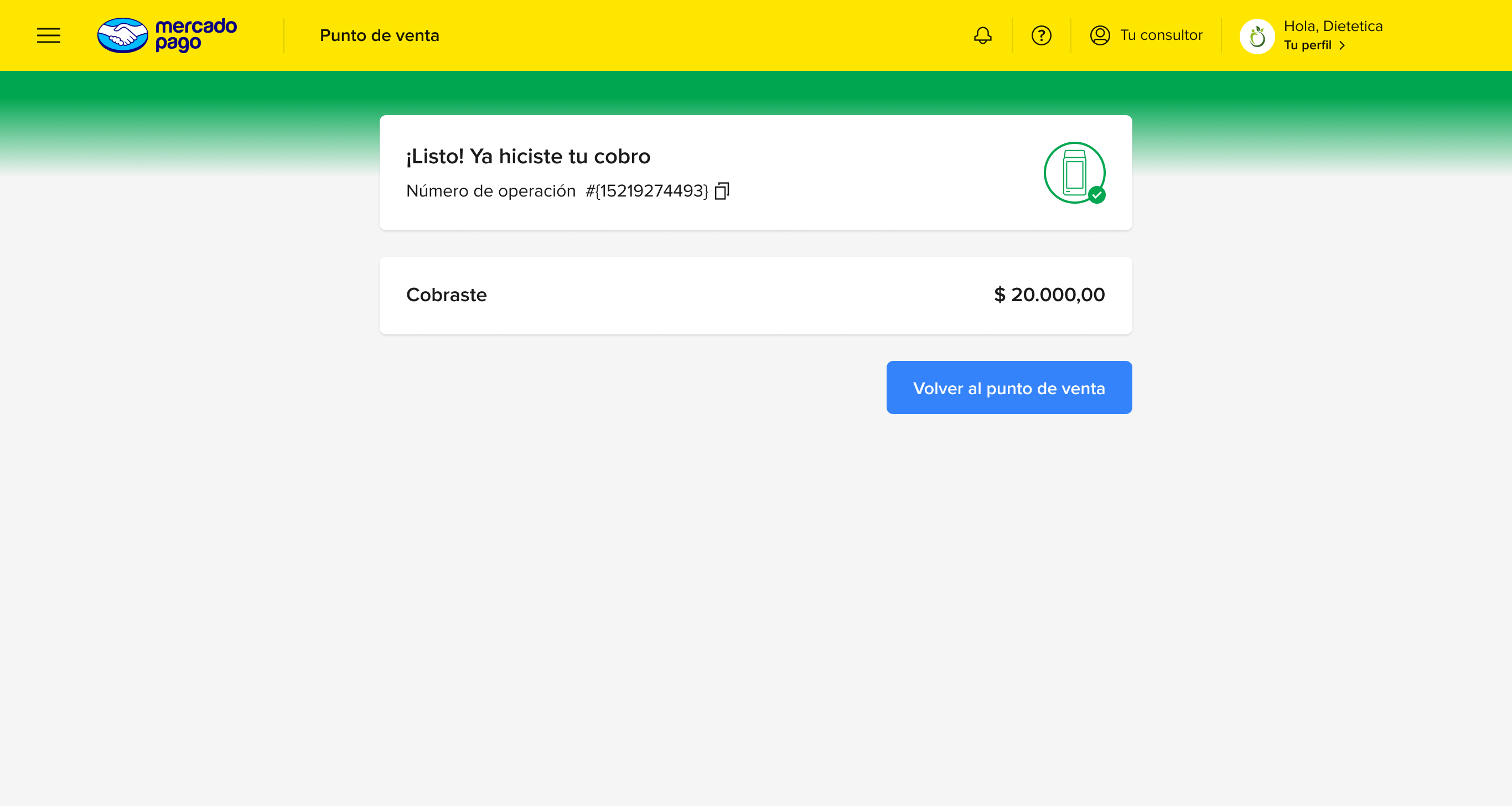
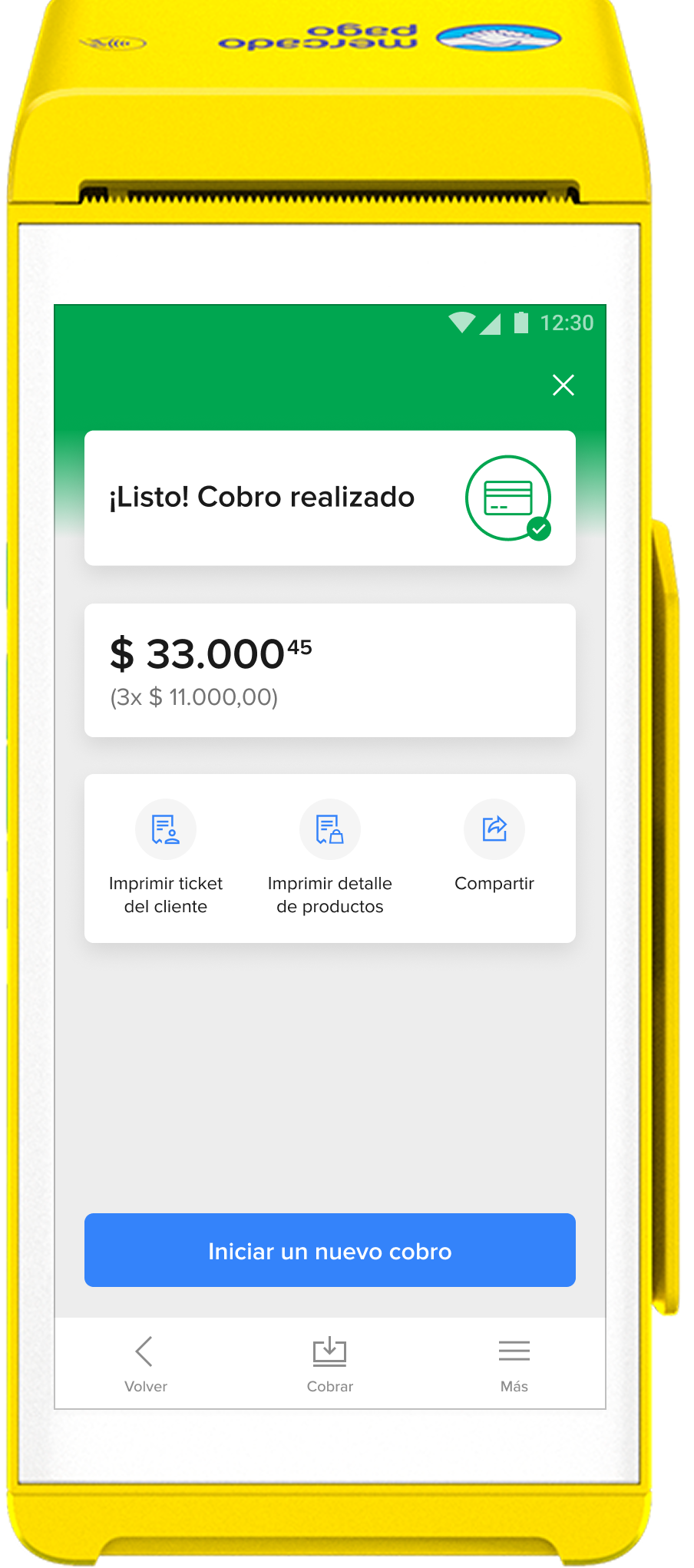
After payment is confirmed, the success screen shows the operation number and offers the merchant immediate actions: return to POS for a new sale or proceed to invoice issuance — integrating directly with the SWE invoicing module.
Payment successfully completed
The solution — Smart POS (Card Machine)
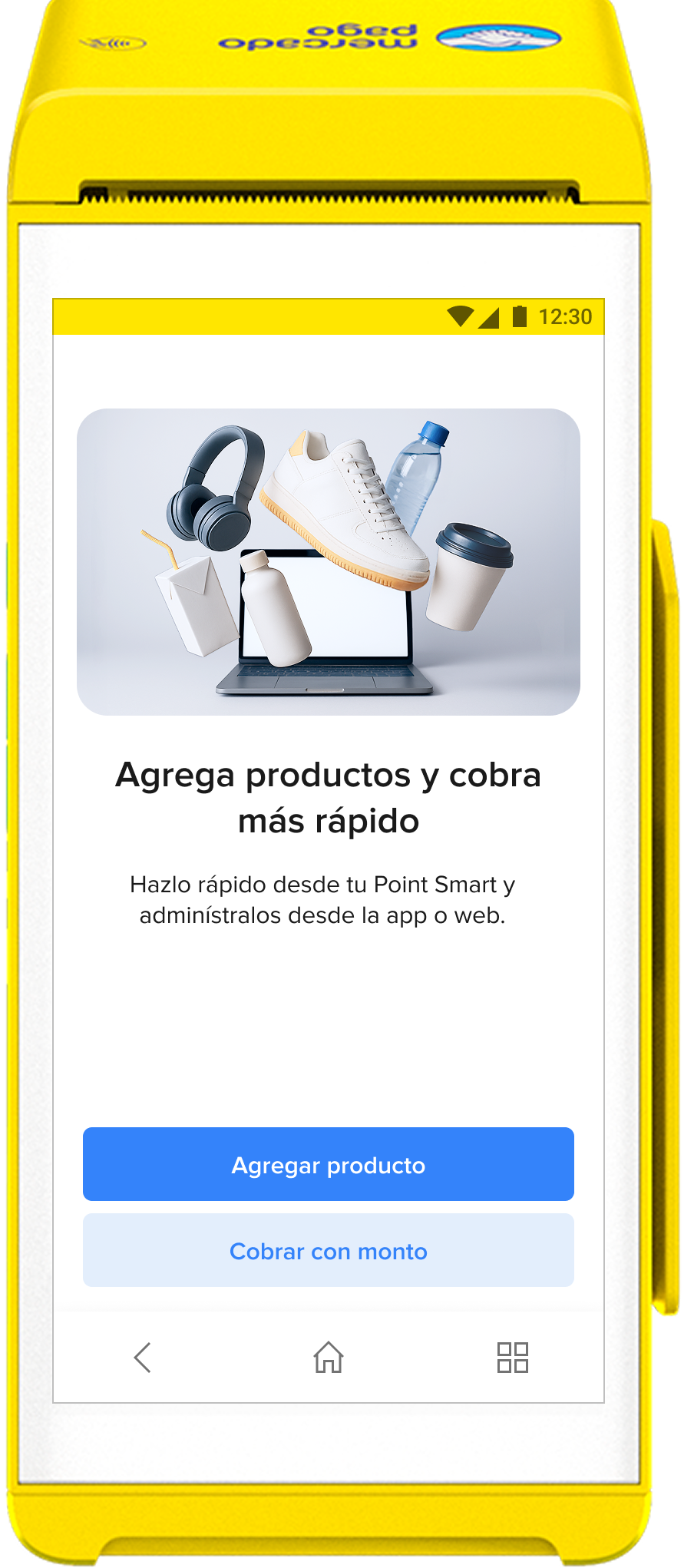
Sales directly on the Point Smart terminal
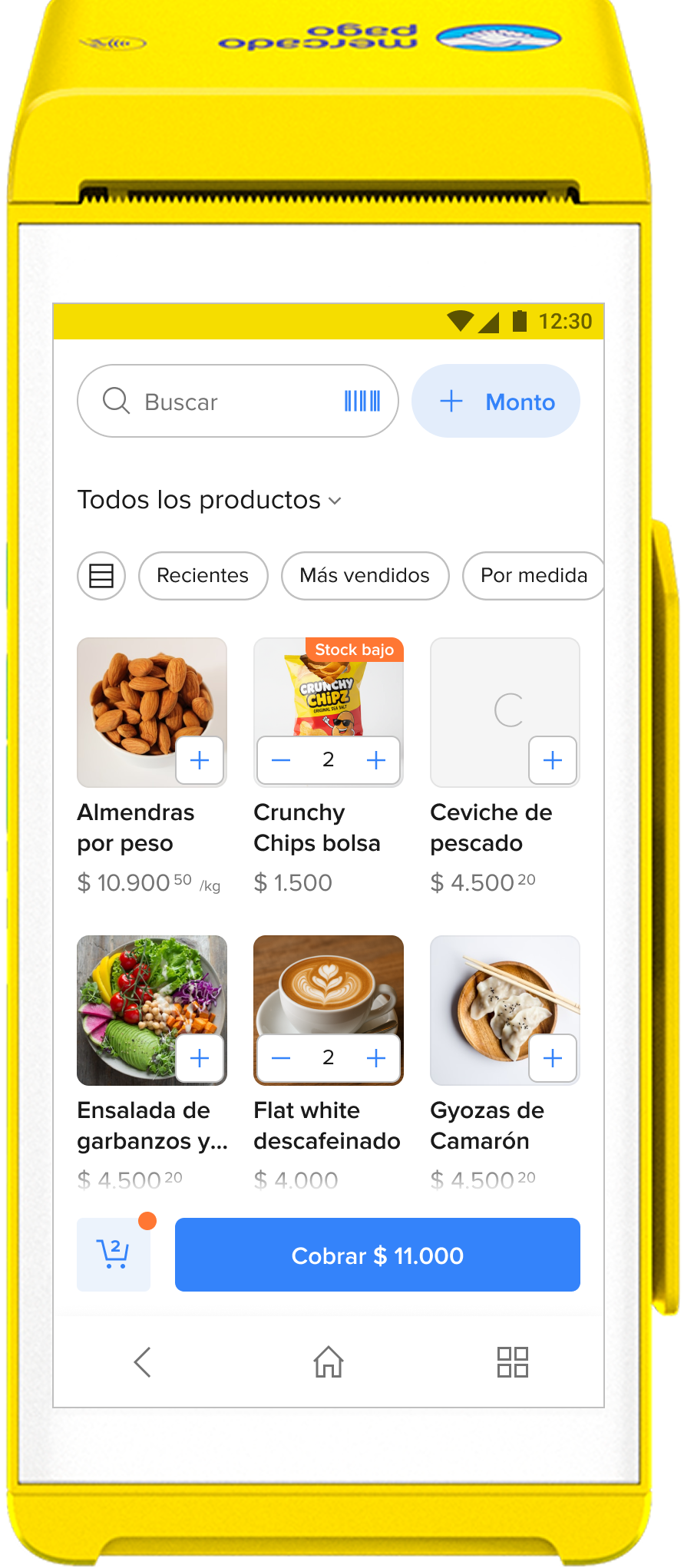
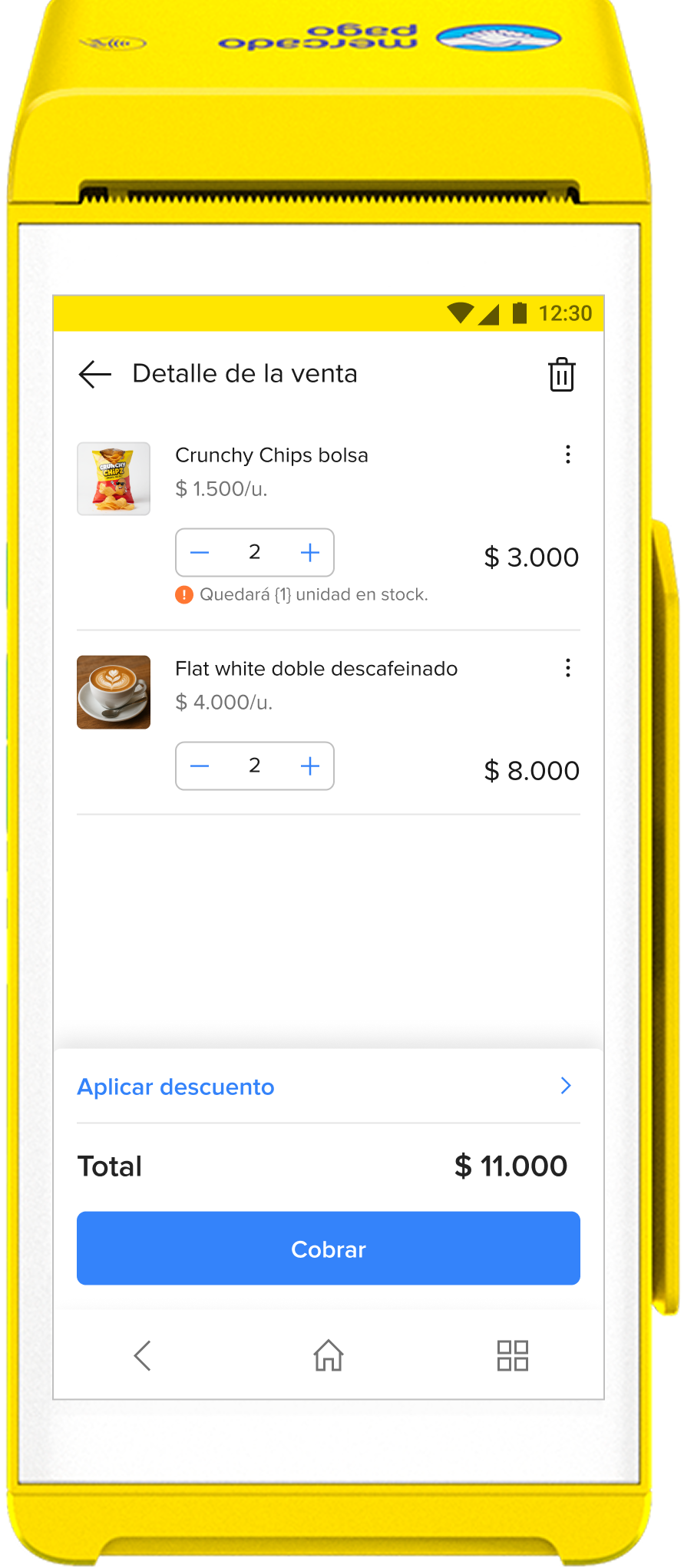
The Smart terminal version allows merchants to record sales and charge without leaving the card machine. The app displays the product catalog in a grid, with search and filters, and the cart updated in real time — with low stock alerts to prevent undue sales.
Home screen
Catalog with cart
Cart detail
Payment completed
Business impact
Increased platform primacy
By capturing cash and third-party sales, Mercado Pago becomes the central business system.
Merchant churn reduction
The end-to-end integration (POS → inventory → invoicing) creates a natural exit barrier for merchants.
Expansion to more mature businesses
Support for fractional units of measure and omnichannel payments opens the market for retail and food service.
The POS transforms the counter into a unified operation — from sale registration to payment and invoice, all in one place.
Designers on the project

Luiz Felipe Nepomuceno
Sr. UX Designer

Gabriel Gonzaga
Project Lead Designer

Melissa Salvatti
Semi Sr. UX Writer